

Emotions shape our lives in quiet ways. Sometimes, they flood us. Other times, they barely register, but still color our decisions. We all know what it is to act in the heat of a moment, only to regret it later. Mastering emotional self-distancing gives us space to notice, reflect, and choose better—for ourselves and for those around us.
Observe before you react.
In our experience, emotional self-distancing is not about avoiding feelings or pretending to be “above” them. It is about creating a healthy pause, a moment between stimulus and response. That space is where self-awareness grows. When we cultivate distance between ourselves and our emotions, we can see things more clearly, break old cycles, and act with intention. Below, we share several simple frameworks to help practice this skill in daily life.
Understanding emotional self-distancing
We often find it helpful to clarify what emotional self-distancing truly means. Emotional self-distancing is the active process of observing our emotions as if from the outside, instead of being swept away by them in the moment. It involves perspective, curiosity, and patience.
Some people imagine “stepping back” or “zooming out” on a situation. Others picture their experience as if they were a neutral bystander. However you visualize it, self-distancing lets us ask questions like:
- What am I really feeling right now?
- Why might this emotion be showing up?
- If I looked at this as a friend might, what would I see?
These questions don’t remove emotion. They help us interact with it more wisely.
Framework 1: The third-person perspective
One of the simplest, yet most powerful, self-distancing tools we have found is the third-person perspective. This means talking to ourselves using our own name, or “he/she/they,” instead of “I.”
When we switch perspective, we switch our story.
Here’s how it works. Instead of saying to ourselves, “I’m furious with my colleague,” we might say, “Maria is feeling frustrated with her colleague.” Research in this area has shown that this shift makes emotional experiences feel less overwhelming and more manageable.
Shifting to the third-person view reduces emotional reactivity and supports better decision-making.Try this framework during moments of tension:
- Pause and notice the feeling.
- Describe the situation as if you were observing someone else: “(Your Name) is feeling…”
- Ask: “Why might (Your Name) feel this way?”
- Consider what advice you’d give if this were a friend.
We find this approach simple enough to use anywhere—at work, at home, or in public spaces.
Framework 2: The timeline method
Sometimes, emotions are powerful because they feel permanent. We get trapped in “right now,” losing sight of how feelings shift with time. Using the timeline method, we ask ourselves to place the moment in a broader context.
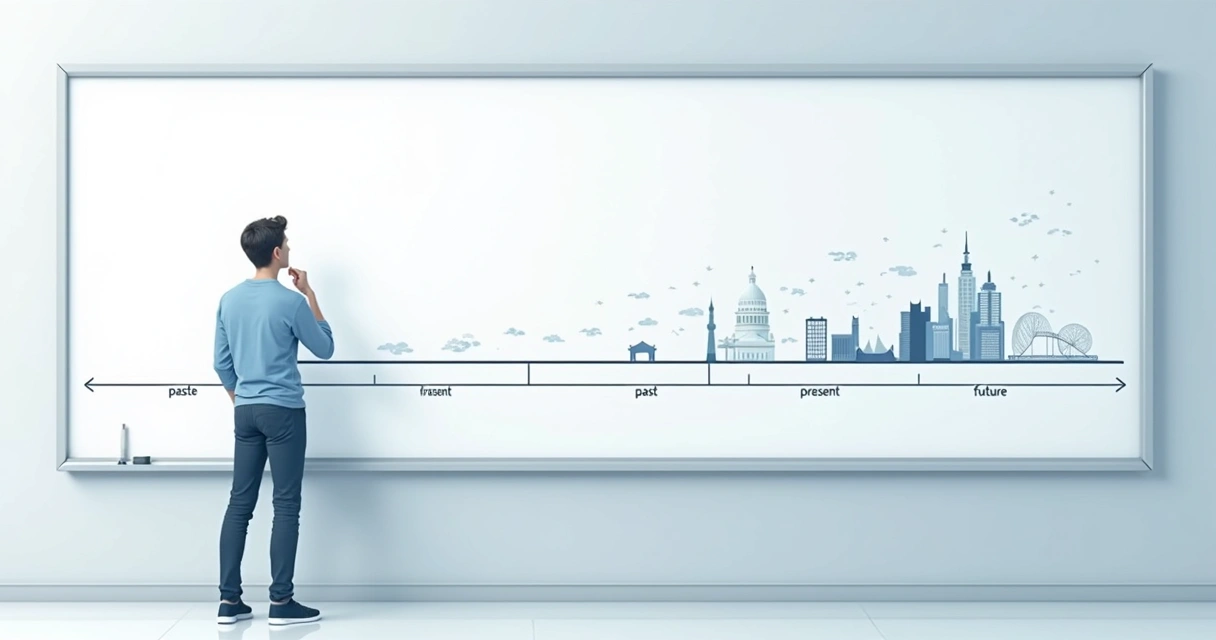
This framework includes:
- Reminding ourselves of previous, similar situations and how we felt after some time had passed.
- Projecting forward: how will we likely feel about this tomorrow, next week, or next year?
- Asking: What is temporary here? What remains steady?
By widening our sense of time, we can decrease emotional intensity and increase acceptance.
When trying this method, we might think, “Last time I felt this, it faded in a few hours,” or “Will this matter to me in five years?” Often, negative feelings lose some of their edge when we see them as passing experiences instead of defining features.
Framework 3: The language of curiosity
When emotions spike, judgement usually follows close behind. “I shouldn’t be angry.” “This is ridiculous.” The language of curiosity interrupts that loop. Instead of judgement, we turn toward interest and wonder.

Curiosity gives us permission to ask “what” and “how,” instead of “why” and “should.”
Practical ways to do this include:
- Replacing self-judgement (“I messed up again”) with curiosity (“What’s happening inside me right now?”)
- Describing experiences, not evaluating them (“I notice my heart is racing” vs. “I’m panicking”).
- Allowing emotions to be signals, not orders (“What might this anger want me to notice?”)
By adopting a curious mindset, we learn from every feeling rather than being ruled by them.
Framework 4: The breath and body anchor
Sometimes, our bodies react before our minds. Fast heartbeats, headaches, tense muscles—these are all signs of emotion in action. The breath and body anchor framework brings us back into the present using our physical senses.
Try these steps:
- Notice the first sign of an emotional wave—maybe a tightness in your chest or a pit in your stomach.
- Pause and take three slow breaths. Focus on the air coming in and out.
- Put a hand on your heart or another place that feels tense. Remind yourself, “This feeling is allowed."
- Once the physical storm quiets, reflect on what the emotion is trying to tell you.
Returning to the body interrupts mental spiraling and lowers stress.
This framework grounds us, helping to reset the mind for more useful reflection.
Framework 5: The written reflection
We have often heard that putting pen to paper works wonders for emotional clarity. The written reflection framework is about taking our swirling thoughts and grounding them in language.
- Write down what happened, what you felt, and what you thought.
- Write as if describing someone else’s experience.
- Ask questions on paper: “What would I advise a friend?” “What else could be true here?”
- Finish with a reflection: “How do I feel having written this?”
This process slows the mind, reduces reactivity, and leaves a record we can return to. Over time, these writings reveal emotional patterns and personal growth.
Tips for making frameworks work in daily life
Practicing emotional self-distancing is like building any other skill. Patience, persistence, and kindness to ourselves are key. Here are our favorite ways to create habits around these frameworks:
- Pair the framework with triggers—like using the timeline method every time you feel stuck on a problem.
- Set small reminders, such as notes or alarms, to check in with your emotional state.
- Share what you’re trying with a trusted person; talking about the process increases commitment.
The more we practice, the more natural it becomes to pause and choose rather than react. With steady use, these frameworks help us become calmer, wiser, and more present for the real moments in our lives.
Conclusion
Knowing what we feel is the first step toward acting the way we want. These simple frameworks for emotional self-distancing give us tools to step back, see clearly, and choose with intention. We believe that with practice, anyone can build more space between impulse and action, leading not to perfection, but to better alignment with personal values and clearer, more compassionate relationships. The journey is ongoing—but each pause, each breath, and each reflection makes a difference.
Frequently asked questions
What is emotional self-distancing?
Emotional self-distancing is a practice where we observe our emotions from a slight distance, like an outside perspective, instead of getting caught up in them. It helps us gain clarity and make thoughtful choices, rather than reacting automatically.
How can I practice self-distancing daily?
We recommend pairing simple frameworks with daily triggers. For example, when you notice strong feelings, try switching to the third-person perspective, use the timeline method to zoom out, write about your experience, or pause to bring attention to your breath and body. Over time, these practices get easier and become habits.
What are simple frameworks for self-distancing?
Simple frameworks include the third-person perspective (talking about yourself by name), the timeline method (placing current feelings in a bigger picture), using language of curiosity (asking what and how), anchoring in breath and body, and writing reflections about your feelings as if observing from the outside.
Is emotional self-distancing effective for stress?
Yes, emotional self-distancing has been shown to lower stress by reducing the impact of overwhelming emotions and promoting understanding rather than reactivity. Regular use helps the body and mind return to a calmer state.
When should I use self-distancing techniques?
Self-distancing is helpful anytime emotions become intense or difficult to manage—such as during arguments, after stressful events, or before making decisions. With practice, these techniques can be used even in less dramatic situations to build ongoing emotional awareness and resilience.