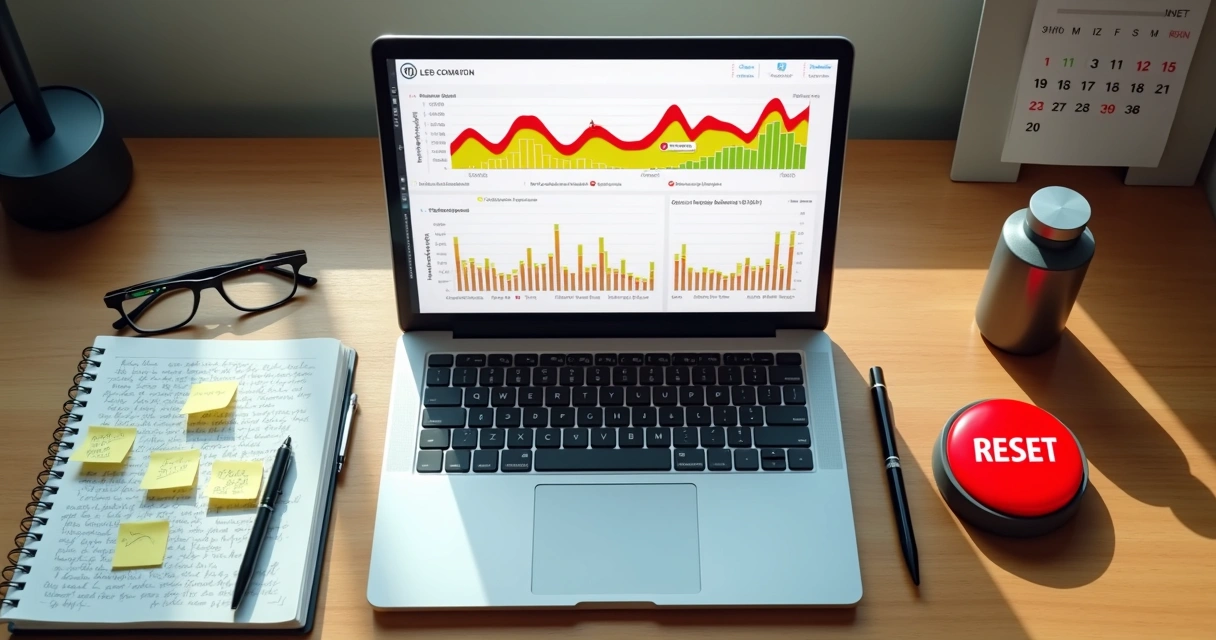


We value self-coaching because it can build awareness, discipline, and honesty. It can help us pause, name what we feel, and choose better actions. But there is a problem that many of us do not notice at first. The same practice that should move us forward can become a refined way of staying still.
Self-coaching becomes avoidance when reflection replaces action for too long.
We have seen this happen in quiet ways. A person journals every day, reads about mindset, tracks emotions, and keeps making fresh plans. From the outside, it looks serious. Inside, though, the hard conversation is still waiting. The decision is still delayed. The risk is still untouched.
Insight is not the same as movement.
A university-linked study on procrastination and coaching outcomes found that self-coaching was less effective than individual coaching and group training for reducing procrastination. Participants also reported lower satisfaction and lower goal attainment. We think this matters because it shows a limit many people feel but do not admit. Self-direction can help, but by itself it may not be enough when the pattern involves delay, fear, or self-protection.
Why avoidance can look like growth
Avoidance is rarely lazy in appearance. In many cases, it looks thoughtful. It sounds wise. It uses good language. That is why it can stay hidden for a long time.
We may say we are "processing" when we are postponing. We may call it "preparation" when we are trying not to fail. We may keep searching for clarity because clarity feels safer than commitment.
In our experience, avoidance often borrows the tone of maturity. It says:
I need more time to understand myself.
I am not ready yet.
I will act when I feel fully aligned.
I just need one better plan.
Some of these statements can be true. The issue is not the sentence. The issue is repetition without change.
A 2014 study on why people avoid medical care identified fear, denial, and avoidance behaviors as common reasons for delay, with poorer outcomes when those patterns remain. We see a similar mechanism in personal growth. When discomfort is treated like danger, the mind becomes very skilled at creating distance from what needs to be faced.
Signs that self-coaching is turning into avoidance
There are patterns we can watch closely. One sign alone may not mean much, but several together deserve attention.
You keep rewriting your goals, but your behavior stays the same.
You spend more time thinking about the next step than taking it.
You feel brief relief after reflection, then return to the same stuck point.
You collect tools, prompts, and frameworks without using them in real situations.
You say you are healing, but you avoid feedback, conflict, or exposure.
You treat every uncomfortable emotion as a reason to pause action.
If self-coaching gives us relief but not change, it may be serving avoidance.
We once saw someone prepare for one honest conversation for months. Notes were written. Emotions were mapped. Possible outcomes were listed. There was care in all of it. But the call never happened. The self-coaching was real, yet it had slowly become a buffer between intention and life.

What healthy self-coaching looks like
Healthy self-coaching does not ask us to be perfect before we move. It helps us act with more awareness, not less courage.
We think useful self-coaching has three parts working together:
Clear observation of thoughts, emotions, and habits.
Honest contact with what is uncomfortable.
Visible action that can be checked in real life.
Without the third part, the first two can become an inner loop. We learn to describe ourselves very well, but we do not transform much.
Good self-coaching should reduce self-deception, not improve it.
This is also why outside structure can help. A 2023 research report on coaching combined with self-monitoring apps found better adherence and better results when self-guided efforts were paired with added support. We do not read that as bad news. We read it as realism. Human beings often do better when reflection is connected to structure, accountability, or a lived system of practice.
Questions that expose avoidance
When we suspect avoidance, we do not need more theory first. We need better questions. These questions can bring the pattern into the open.
What action have I delayed even though I already know it matters?
What feeling am I trying not to experience?
Am I seeking truth, or am I seeking emotional safety?
What have I called reflection that was really postponement?
If I could not think about this anymore today, what would I do next?
These questions can sting a little. That is often a good sign. Avoidance usually weakens when language becomes plain.
How to shift from avoidance to action
The answer is not to stop reflecting. The answer is to reconnect reflection with reality. We can do that in simple ways.
First, shorten the gap between insight and behavior. If we wrote a page about a boundary, we can send one message that expresses it. If we noticed a pattern of withdrawal, we can stay present in one hard conversation. If we saw that fear is active, we can take one step while fear is still there.
Second, define actions that can be seen. "I will become more confident" is too vague. "I will ask for the meeting by Thursday" can be checked.
Third, notice when self-coaching becomes soothing. Relief is not wrong, but it can be misleading. Sometimes we feel better because we touched the topic, not because we changed it.
Awareness must reach behavior.

Fourth, allow support when needed. Self-honesty grows when we stop treating independence as a rule. Sometimes another person, a structure, or a deadline helps us stop circling the same issue alone.
Conclusion
Self-coaching is useful when it increases presence, responsibility, and action. It becomes avoidance when it helps us stay busy with ourselves while life waits at the door. We do not need to reject reflection. We need to test it. If our self-coaching is real, it will show up in decisions, conversations, boundaries, and repeated behavior. That is where inner work becomes lived change.
Frequently asked questions
What is self-coaching avoidance?
Self-coaching avoidance is the use of reflection, planning, or self-analysis to delay action, risk, or emotional exposure. It often looks thoughtful on the surface, but it keeps us from facing what we already know we need to do.
How to tell if I am avoiding?
We can tell by checking whether our insight is leading to visible change. If we keep thinking, journaling, or planning without taking concrete steps, avoidance may be present. A good test is simple: what action have we delayed even after gaining clarity?
Why does self-coaching become avoidance?
It often happens because action brings uncertainty, exposure, and discomfort. Reflection feels safer. We may prefer understanding a problem to risking failure, conflict, or rejection. In that sense, self-coaching can become a protected space where we feel engaged without being fully challenged.
What are signs I am avoiding growth?
Common signs include repeated planning without follow-through, frequent changes in goals, constant search for better methods, fear of feedback, and relief after reflection without any real shift in behavior. When the inner work stays private and never reaches daily life, growth may be stalled.
How can I stop using self-coaching to avoid?
We can reconnect reflection with small, visible actions. Set one clear step, give it a deadline, and do it before creating a new plan. It also helps to accept discomfort as part of growth and to seek structure or support when we notice we are repeating the same loop alone.